First Track Day Checklist
Whether you're running your first autocross in a parking lot or lining up for HPDE 1 at a road course, showing up unprepared wastes your day and can get you sent home from tech inspection. This checklist covers everything — what the organizers require, what your car needs, and what experienced drivers don't leave home without.
My lists below are organized by priority. Required items will get you turned away without them. Recommended items are what seasoned drivers like me have learned the hard way to bring.
Required Safety Gear
The single most common reason drivers are turned away at tech is an out-of-date or wrong-rated helmet. Get this right before anything else.
- Snell SA2020 helmet (minimum) — SA2020 is now the minimum accepted standard at most HPDE and time trial events. SA2015 is being phased out and is no longer accepted at most events. Do not buy SA2015. M-rated helmets are not accepted at road course events.
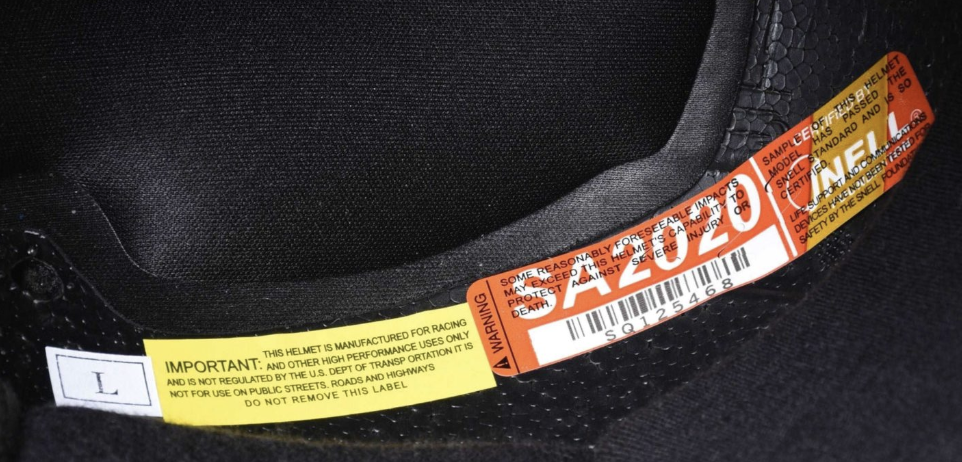
The Snell SA2020 sticker is inside the helmet, typically in the crown. This is what tech inspectors look for. Click to enlarge. - Long-sleeve shirt or driving suit — Required at most road course events. Cotton is acceptable at HPDE 1–2; for HPDE 3+ and GridLife advanced groups, a fire-retardant suit is typically required.
- Long pants — No shorts on track. Jeans, athletic pants, or driving suit trousers all work.
- Closed-toe shoes — Sandals and flip-flops will get you turned away. Driving shoes aren't required at entry levels, but thin-soled shoes (not thick hiking boots) give better pedal feel.
Car Preparation
Tech inspection at most events is a 5-minute walk-around. Inspectors are looking for safety issues that could hurt you or another driver. The items below are what they actually check.
Brakes — the most important system on track
- Brake fluid flush (less than 1 year old) — Stock brake fluid absorbs moisture over time. Wet fluid boils at a much lower temperature. Flush with fresh DOT 4 fluid before any road course event. Cost: ~$15–$25 and 30 minutes.
- Brake pads with ≥ 50% life remaining — Tech inspectors will eyeball pad thickness through the wheel. Worn pads can overheat and fail. Consider upgrading to a performance pad if you're doing road course sessions. See our Brake Pad Guide.
- No brake system leaks or soft pedal — Bleed the system if the pedal feels spongy at all.
Tires
- Minimum 3/32" tread depth — Most events require this. Bald tires overheat fast and are a safety hazard.
- No visible cords, bubbles, or damage — Tech inspectors will look.
- Lug nuts/bolts torqued to spec — Do this the morning of the event after loading the car.
- Check tire pressure when cold — Note your cold pressure. HPDE instructors often want to know your baseline. You'll adjust hot pressures throughout the day.
- Bring a tire pressure gauge — Infrared gauge is ideal to check all four corners after sessions.
- Portable 12V tire inflator — Essential for adjusting pressure between sessions. Plugs into your car's power outlet. See our Tire Pressure Guide for the full session adjustment process.
- Sidewalk chalk — Draw a line across the tread and down the sidewall before a session. After the session, wear patterns tell you whether your pressure is in range and whether the sidewall is rolling under load.
General safety checks
- Secure or remove floor mats — Unsecured floor mats can slide under the brake pedal. Either remove them or zip-tie them down.
- Remove loose items from the cabin — Water bottles, sunglasses, phone chargers, change — all of it comes out. Loose objects become projectiles. Tech inspectors will open the door and look.
- Battery secured (no wobble) — Check that your battery tray hold-down is tight.
- No leaking fluids — A fresh oil leak will get you black-flagged. Check under the car the morning of.
- Tape over headlights and taillights — Not required at HPDE, but standard practice to protect glass from gravel kicked up on track. Blue painter's tape works fine.
- Remove exterior accessories — Loose spoilers, antenna, exterior mirrors with visible stress cracks — these can come off at speed.
What to Pack
A well-prepared paddock kit separates the driver who has a full day on track from the one who cuts sessions short.
Tools (bring these, use them often)
- Torque wrench — Re-torque lug nuts after the first heat cycle (hot torque differs from cold). This is a legitimate safety habit.
- Floor jack and jack stands — For tire rotations, brake checks, or if you flat. Many events have a jack you can borrow but don't count on it.
- Tire pressure gauge — A dial or digital gauge, not a stick gauge. Infrared gun is better for quick hot checks.
- Extra brake fluid (same brand/type you flushed with) — For bleeding if needed mid-day. DOT 4 is standard.
- Basic hand tools — 10mm, 13mm, adjustable wrench, zip ties, duct tape. You'll use these.
- Engine oil (1 quart, same spec as your car) — High-rev track driving consumes oil faster than street use. Check the dipstick between sessions. Running low mid-event is avoidable.
Paddock Organization
- 5-gallon buckets — The unsung hero of the paddock. Use them to carry tools, store loose items, sit on between sessions, or hold water for cooling. Cheap, stackable, and endlessly useful. Bring two.
- Plastic milk crates / egg crates — Better than buckets for tools and gear you need to access quickly. Stack them, zip-tie them together, throw a bungee over the top. Veteran paddock drivers swear by them. Easy to spot your gear from across the paddock.
The goal is simple: everything that came out of your car needs a designated place to live while you're on track. A missing floor mat or stray water bottle found in the car at grid is an immediate black flag. Set up your paddock space before your first session and keep it consistent throughout the day.
Personal items
- Water — more than you think — You're in a hot car with no A/C doing physical work. Bring a cooler with ice water. Dehydration kills lap times and judgment.
- Sunscreen and hat — You'll be in the paddock for hours between sessions.
- Folding chair — Paddock time is significant. A chair is worth more than it weighs.
- Ear protection — Optional but smart if you run open windows or a loud exhaust. Track noise for a full day is significant.
- Camera or GoPro mount — Check event rules first; some require mounted cameras. Video is how you actually improve.
Event logistics
- Registration confirmation / event number — Have it on your phone or printed. You'll need it at gate check-in.
- Numbers for your car (HPDE) — Most events require door numbers. Painter's tape and a marker works. Some events supply numbers. Check the event brief.
- Tech inspection form (if mailed to you) — Many SCCA and NASA events mail a pre-tech form you complete at home. Fill it out and bring it.
Tech inspection lines get long. Arrive at least 60–90 minutes before your first session. Late arrivals often miss their first run group entirely. Check the event schedule for tech inspection cutoff time.
What Not to Do
These come up every event weekend:
- Don't wear jewelry on track — Rings, bracelets, and watches can catch on steering wheels and door frames. Remove them before you put the helmet on.
- Don't bring passengers without checking rules — Autocross: usually no passengers allowed during runs. HPDE: passengers in the right seat are common in lower run groups but require sign-off. Check event rules.
- Don't skip the driver's meeting — It's not optional. Missing it can get you pulled from the event. First-timers especially need the flag color review.
- Don't run with your parking brake engaged or on — Sounds obvious. Happens every event. Double-check before you grid.
- Don't push to the limit on your first session — Learn the track layout first, find the layout, then start pushing. The drivers who improve fastest are the ones who build incrementally.
Next Steps
Once you've got the basics dialed in, these guides cover the things that make the biggest difference in lap times:
- How to Set Tire Pressure — session-by-session pressure adjustment, chalk method, and cold vs hot targets
- Data Logging & Camera Mounting — the best apps for lap timing and how to safely mount your phone on track
- 200TW Tire Comparison — when you're ready to move past all-season tires
- Brake Pad Guide — the second performance upgrade most drivers make after tires